Choosing materials for a fire-related building application takes more thought than simply finding a product labelled fire resistant. The board, door construction, decorative finish, hardware and surrounding building system can all influence what is suitable for a particular project.
This is particularly important when comparing materials for Australian commercial buildings, apartments, fit-outs and other projects where fire-resistant construction has been specified. Required fire doors are subject to specific NCC provisions, including compliance with AS 1905.1, while testing under AS 1530.4 is referenced through those requirements. The exact requirements depend on the building and application.
For that reason, the best starting point is not simply asking which fire rated board looks right or costs less. Start by understanding what the material needs to do, where it will be used and what documentation the project requires.
What “fire rated” means for your application
The term fire rated board can cover different products used across construction, passive fire systems, door manufacturing and architectural interiors. That can make comparisons confusing because two products described in similar language may have very different intended applications.
A board used as part of a wall, ceiling or structural protection system, for example, should not automatically be treated as interchangeable with a board or core specified for a door.
The important question is therefore not simply, “Is this board fire rated?” A more useful question is, “Is this product suitable for the exact construction or system specified for my project?”
That distinction helps buyers avoid choosing materials based only on a product name, thickness or marketing description.
Why documentation matters before ordering
Before purchasing materials, check the drawings, schedules and fire specifications supplied for the project. If a particular tested or approved system has been nominated, changing one component may require further review.
Australian NCC provisions demonstrate why this system-based approach matters. For required fire doors, the NCC links compliance to AS 1905.1 and its fire-testing requirements rather than simply requiring a particular generic board material.
If the documentation is unclear, speak with the relevant architect, builder, fire professional, certifier or other responsible project professional before ordering.
This is particularly important during renovations and commercial fit-outs, where contractors can sometimes discover that the existing construction is different from what was initially expected.
Where fire rated board Fits into commercial and residential fire doors
When looking at commercial and residential fire doors, it is helpful to think about the complete doorset rather than one individual material.
A door may include a core, skins or facings, edge components, a frame, hinges, a closer, latching hardware, seals and, in some designs, glazing. The completed construction must suit the specified application.
That means selecting fire rated board is only one part of the process.
This distinction also matters when a project calls for a decorative architectural door. Adding a different facing, changing hardware or altering an opening should not be assumed to be acceptable simply because the main door core remains unchanged.
For required fire doors, the NCC specifically addresses the performance of the fire door and, where applicable, glazing within it.
Understanding fire and smoke doors
The terms fire and smoke doors are sometimes used together, but they should not automatically be treated as the same product.
The NCC contains separate provisions for fire doors and smoke doors. Its smoke-door provisions address matters including resistance to smoke passage, door operation and smoke seals, while required fire doors are addressed through fire-resistance provisions.
For buyers, the practical lesson is simple. Confirm what the project actually specifies before comparing materials.
If the drawings call for a smoke door, fire door or another specialised doorset, use that specification as the starting point. Do not replace one with another simply because the products look similar.
Comparing fire door materials for Different Applications
Look at the full material specification
There is no single list of fire door materials that automatically suits every project.
Depending on the approved door construction, materials may include different types of cores, timber-based products, skins, decorative facings, laminates and other components. The correct combination depends on the door design and required performance.
When comparing materials, consider the nominated substrate, thickness, finished dimensions, edge construction and intended facing.
You should also find out whether machining, trimming or other fabrication is permitted within the requirements of the specified product or doorset.
This is especially useful when joiners and contractors are working from architectural drawings that show a particular visual finish but contain the technical door requirements elsewhere in the specification.
Match materials to the intended environment
A door in a quiet residential setting may face different day-to-day conditions from a door in a busy office, apartment common area, hospital, school, hospitality venue or retail building.
That does not necessarily mean the underlying fire requirements are simply higher or lower. Instead, it means practical considerations such as traffic, impact, cleaning, appearance and hardware requirements need to be considered alongside the fire specification.
For commercial and residential fire doors, buyers should therefore compare the complete requirement rather than selecting solely on appearance.
The project location also matters. Building requirements are applied through Australian states and territories, and the ABCB advises users to confirm which NCC edition applies with the relevant jurisdiction because adoption dates can differ.
Adding Timber and Laminate Finishes Without Losing Sight of the Specification
Fire-related requirements do not mean every architectural interior needs to look industrial.
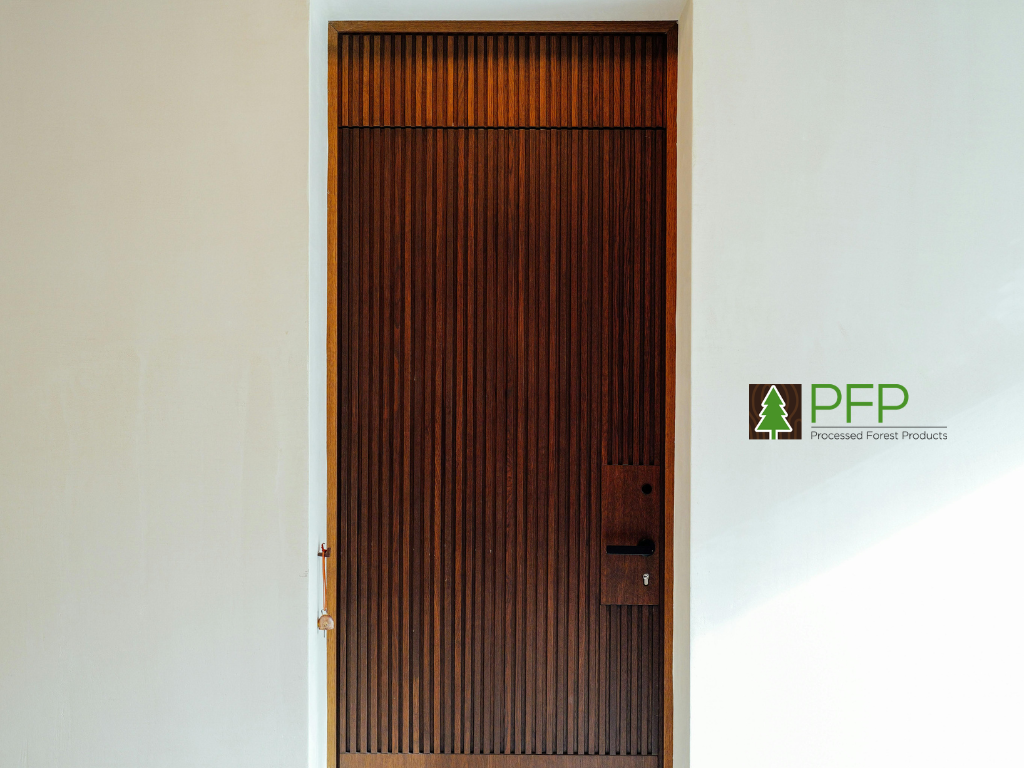
Timber veneer can be considered where the specified construction allows the nominated decorative surface. Veneer can also help designers visually connect doors with nearby joinery, wall panels and other interior finishes.
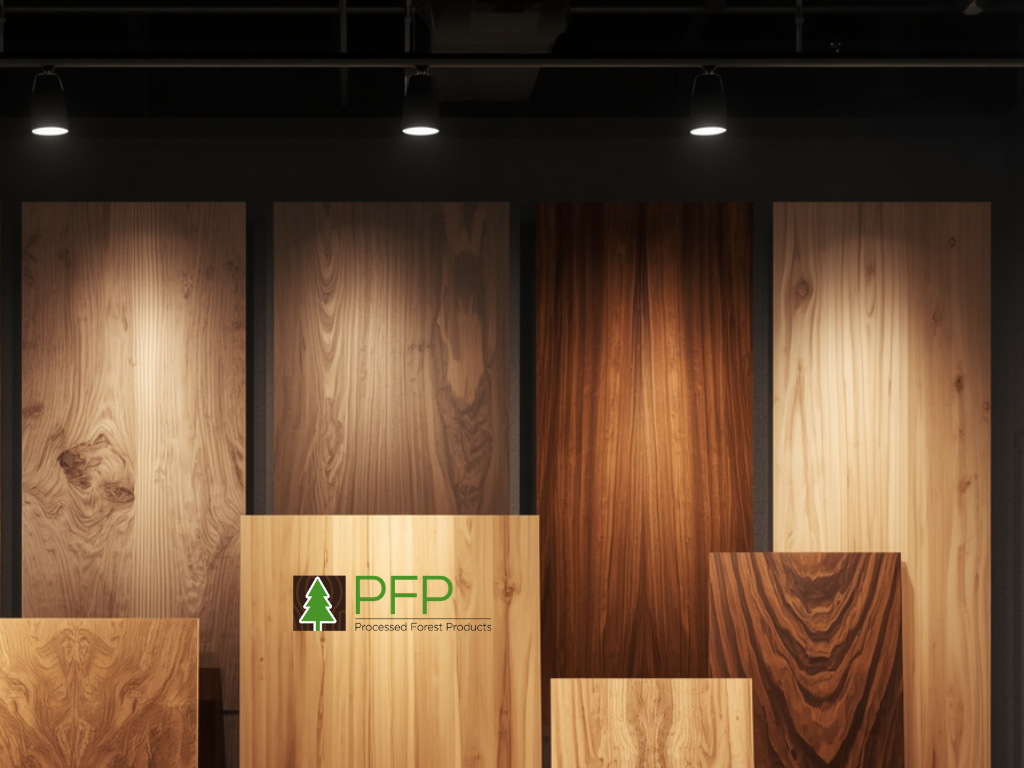
Species and appearance can then be chosen according to the design brief. anegre timber can suit interiors that call for a lighter natural character, while american oak veneer is widely recognised for its clear timber grain and adaptable architectural appearance.
The key is to make the aesthetic decision after establishing what substrate and door construction the project permits.
Forest Products currently lists timber veneer among its product categories and says its custom solid-core doors can be produced with decorative timber veneer, high-pressure laminate or foil surfaces. It also describes the ability to sequence-match doors with corresponding wall panels where required.
Darker finishes including wenge veneer and laminates
For interiors requiring deeper colours and stronger visual contrast, wenge veneer can provide a darker timber appearance.
Another option may be a decorative laminate. Laminates are useful where designers are looking for consistent colours or specific surface styles, but the chosen finish still needs to suit the specified substrate and intended construction.
This is where early coordination helps.
Instead of selecting a finish at the end of the project, architects, designers and joiners can identify the preferred appearance while the board, door and fabrication requirements are still being reviewed.
That makes it easier to resolve grain direction, veneer matching, edge details and adjacent wall panels before manufacturing begins.
How to Choose the Right fire rated board and Supplier
Start with the application rather than appearance
A reliable buying process begins with the project requirement.
Identify where the board will be used, the specified construction, required dimensions, quantity and desired finish. Then check what supporting documentation is required before comparing suppliers.
Do not assume that a thicker board automatically provides the required performance. Likewise, a product described as fire resistant should not automatically be substituted into an existing tested construction.
If the board forms part of a required fire-resisting element or doorset, confirm that the proposed material is appropriate for that exact application.
This approach is useful for architects and builders, but it also helps property owners. Asking the right questions early can prevent confusion between an architectural board with particular fire properties and a complete fire-rated building system.
Questions to ask laminate board suppliers
When comparing laminate board suppliers, look beyond the surface design.
Ask which substrates are available, what sheet dimensions can be supplied, whether pressing or laminating is completed in-house, what machining is possible and what information is available for the intended application.
Lead times also matter, particularly when the project involves custom sizes, matched veneer, large doors or multiple panels that need a consistent appearance.
Forest Products’ current product information lists MDF, particleboard and plywood products, including Fire Ply among its plywood options. Its PUR lamination capability covers laminates, acrylics and foils across a range of substrates and panel sizes.
These are the types of manufacturing details worth discussing with any supplier before finalising an order.
What Sydney and Western Sydney Buyers Should Check Before Ordering
For Sydney projects, practical manufacturing and delivery questions can be just as important as material selection.
Check the required sheet or door size before assuming a standard product will work. Large architectural doors, oversized wall panels and matched veneer installations may require more manufacturing planning than standard joinery components.
Forest Products lists its manufacturing facility in Milperra, NSW, and its current door information states that it manufactures made-to-measure solid-core doors in a range of dimensions and finishes.
For projects around Western Sydney or elsewhere in NSW, discussing sizes, quantities and delivery requirements before ordering can make coordination easier.
This becomes particularly helpful when a joiner needs doors and surrounding veneered panels to arrive in a sequence that supports installation.
Keep the project documentation consistent
Fire-related materials should not be selected independently by every trade involved in the project.
The architect may have prepared one specification, the door supplier another schedule, and the builder may be coordinating installation against the approved construction documentation.
If there is a conflict, clarify it before manufacturing.
Also avoid assuming that information from an older project automatically applies to a new one. NCC adoption can differ by state or territory, and the ABCB advises practitioners to confirm the applicable edition with the relevant jurisdiction.
Keeping the current drawings, door schedules, finishes and relevant supporting documents together gives suppliers better information and makes product discussions much more useful.
When to Contact Forest Products About Your Project
When custom board, veneer or door requirements need discussion
Supplier input becomes particularly useful when a project moves beyond standard board dimensions or straightforward finishes.
You may need to speak with Forest Products when you are comparing board substrates, planning custom solid-core doors, coordinating timber veneer with adjoining panels or considering laminated surfaces.
Its current product range includes timber veneer, board products, doors and PUR lamination. The company also lists FSC® and PEFC-certified board and veneer options, with availability dependent on the product.
However, when the project involves a fire-related application, ask specifically for information relevant to that application. A decorative manufacturing capability by itself should never be treated as evidence that a particular completed construction satisfies a required fire rating.
What information to provide when requesting advice or a quote
The more useful information you provide at the beginning, the easier it is for a supplier to understand what you need.
Start with the application and project location. Then provide the required board or door dimensions, quantities, substrate information, preferred veneer or laminate, relevant drawings and any fire-related specification or product documentation supplied by the project team.
For doors, include details from the door schedule rather than relying on room names alone.
If your design calls for american oak veneer, wenge veneer, anegre timber or another particular finish, identify that early so availability and matching requirements can be considered together with the substrate.
Most importantly, separate the design question from the compliance question. A supplier can help you investigate materials and manufacturing options, while the responsible project professionals should confirm that the selected construction meets the applicable building and fire requirements.
Taking that approach makes choosing fire rated board much clearer. You can compare products based on the actual application, confirm the required evidence before ordering and still consider the appearance, durability and manufacturing details that matter to the finished project.