A timber feature wall can bring warmth and natural character into an office, restaurant, hotel, education space or reception area. When the wall also needs to help manage sound, however, choosing an attractive timber veneer is only part of the specification.
The acoustic result comes from the complete panel system. The veneer provides the visible timber finish, while perforations, slots, backing materials and other parts of the construction can influence how the system manages reflected sound. WoodSolutions notes that timber acoustic panels commonly use holes or slots to increase sound absorption and reduce reverberation.
That distinction is important for architects, designers, builders and business owners comparing timber veneer suppliers. A panel may look suitable in a sample, yet the complete specification still needs to address acoustic performance, substrate, fire requirements, finish, installation and the visual consistency of the wall.
Here is what to consider before ordering.
Decide whether the goal is reducing reverberation
Start with the room rather than the timber species.
Hard surfaces such as glazing, floors, ceilings and walls can contribute to reflected sound in a busy interior. Acoustic wall and ceiling treatments are often designed to reduce reverberation and improve the way sound behaves within the room. WoodSolutions explains that perforated and slotted timber products can be used to increase sound absorption and reduce echoes.
Think about where the panel will be installed.
An open-plan office may need better control of reflected conversation. A restaurant may need to make a busy dining room more comfortable. Meeting rooms, education spaces and reception areas can have different acoustic priorities.
This is why it is risky to begin by saying, “We want oak acoustic panels.”
First establish what the room needs acoustically. Then select a system and decorative finish that work together.
Where acoustic performance is important to the project, ask for relevant test data for the proposed system rather than relying on general claims about timber.
Do not judge performance from the timber face alone
Timber veneer is a decorative layer of real timber rather than a complete acoustic solution by itself. The Timber Veneer Association of Australia describes veneer as thin slices of timber used as a decorative building material.
Acoustic products show why the distinction matters.
For example, current Australian systems use perforations together with acoustic backing or insulation to achieve their stated performance. Screenwood states that one of its perforated systems reaches its published acoustic result when used with its recommended plasterboard and acoustic insulation. Atkar also combines perforated timber panels with acoustic backing in several systems.
Therefore, ask what exactly has been acoustically tested.
Find out whether the test applies to the panel alone or to a complete assembly with backing, insulation, cavities or particular fixing methods.
This prevents an attractive veneer sample from being mistaken for evidence of acoustic performance.
Understand What Sits Behind the timber veneer
The visible veneer gets most of the attention, but the substrate underneath it also matters.
TVAA identifies particleboard, MDF and plywood as common substrates for veneered products. The appropriate choice depends on the intended use and project requirements.
MDF is commonly considered where a smooth surface and machining are important. Plywood has a different construction and may suit applications with different structural or fixing requirements. Particleboard is another established substrate for veneered products.
Do not select a substrate from appearance because it may be hidden after installation.
Instead, ask how the proposed substrate works with the acoustic panel design, machining pattern, fixing method and project environment.
The Australian veneer industry’s specification guidance recommends identifying the substrate as part of the veneer specification rather than leaving it undecided until manufacturing.
Check how the acoustic treatment changes the panel
Acoustic timber panels may look almost solid from a distance, but their construction can be quite different.
Some systems use visible slots or perforations. Others use very small perforations intended to preserve more of the solid-panel appearance. Australian manufacturers currently offer perforated, slotted and micro-perforated systems with different acoustic characteristics.
That means the visual design and acoustic design should be reviewed together.
Large perforations may become part of the architectural pattern. Very small perforations can produce a more continuous-looking timber surface. Slotted designs can create another visual effect again.
Ask for a full-size or representative sample where possible.
A small veneer swatch can show colour and grain, but it may not show how the finished wall will look once perforations, joints and panel margins are added.
Choose the Veneer Look Before Panels Go Into Production
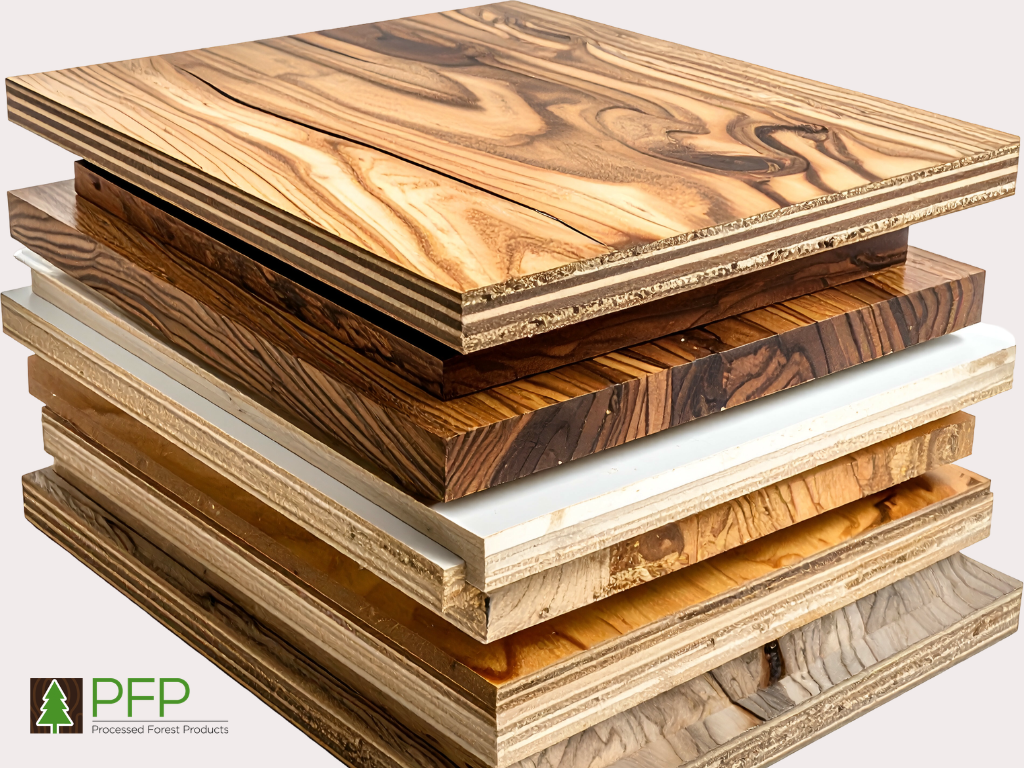
Compare species, grain and veneer cut
Once the acoustic system is understood, you can focus on the timber appearance.
Different species bring different colours, grain structures and natural characteristics. The way the log is cut also changes the visual pattern of the veneer.
TVAA notes that quarter cutting generally produces a straighter grain appearance, while crown cutting produces a different grain pattern. Rotary cutting creates another visual character.
This matters on a large acoustic feature wall.
A veneer that looks subtle on a cabinet door may appear much more active across several metres of panelling.
Ask timber veneer suppliers to show samples of the species and cut being proposed. Natural veneer will also vary because timber is a natural material, so colour and figure should not be expected to look identical from every leaf or log.
For a prominent wall, reviewing actual stock or representative samples can reduce surprises later.
Plan matching and grain direction across large walls
The next question is how individual veneer leaves and panels will relate to one another.
Book matching turns consecutive veneer leaves so they create a mirrored effect. Slip matching places consecutive leaves in the same orientation, while random matching creates a less uniform arrangement. TVAA recognises these and several other matching methods.
Grain direction also needs to be clear.
TVAA recommends specifying whether veneer runs along the long or cross direction of the panel. It also recommends identifying matching type, substrate, edging, finish and, where relevant, sequence matching.
These decisions become particularly noticeable across large timber panels.
For example, vertical grain can visually emphasise height, while horizontal grain can create a different architectural effect. The right choice depends on the design rather than a universal rule.
Make this decision before manufacturing begins. Changing grain direction after panels are produced is generally not a simple finishing adjustment.
Check Fire, Finish and Installation Requirements Early
Acoustic performance is not the only technical requirement that may apply.
For commercial wall and ceiling linings, fire performance can also be relevant. TVAA specifically warns that fire ratings for timber-veneered products, including perforated acoustic and decorative panels, need to be understood in relation to the actual product being specified. It recommends consulting the supplier or panel layer about applicable group ratings and suitability.
Do not assume that selecting a particular timber species automatically gives the complete acoustic panel a particular fire classification.
The substrate, veneer, coating and panel construction may all be relevant to the tested system.
Where your project has a specified fire-performance requirement, ask for documentation that applies to the exact proposed panel or assembly. The architect, certifier or other responsible project professional can then assess whether it suits the application.
This is much safer than trying to infer compliance from the word “fire-rated” in a general product description.
Select finishes for the actual environment
The finish affects appearance and ongoing care.
TVAA notes that coating choice can influence factors such as scratch resistance, yellowing, fading and moisture resistance. Veneer species can also influence how a finish behaves.
Consider the location.
A quiet meeting room wall has different wear conditions from a busy hospitality corridor where people may frequently touch the panels.
Sheen also changes how timber reads under lighting. A matt or satin surface may create a different result from a higher-gloss finish.
For an acoustic system, confirm that the proposed finishing process is compatible with its openings and acoustic construction. Some acoustic manufacturers warn that applying unsuitable coatings over acoustic openings or backing can affect performance.
If panels are supplied unfinished, also discuss sealing and coating requirements before installation.
Choose the Right Panel and Supplier for the Project
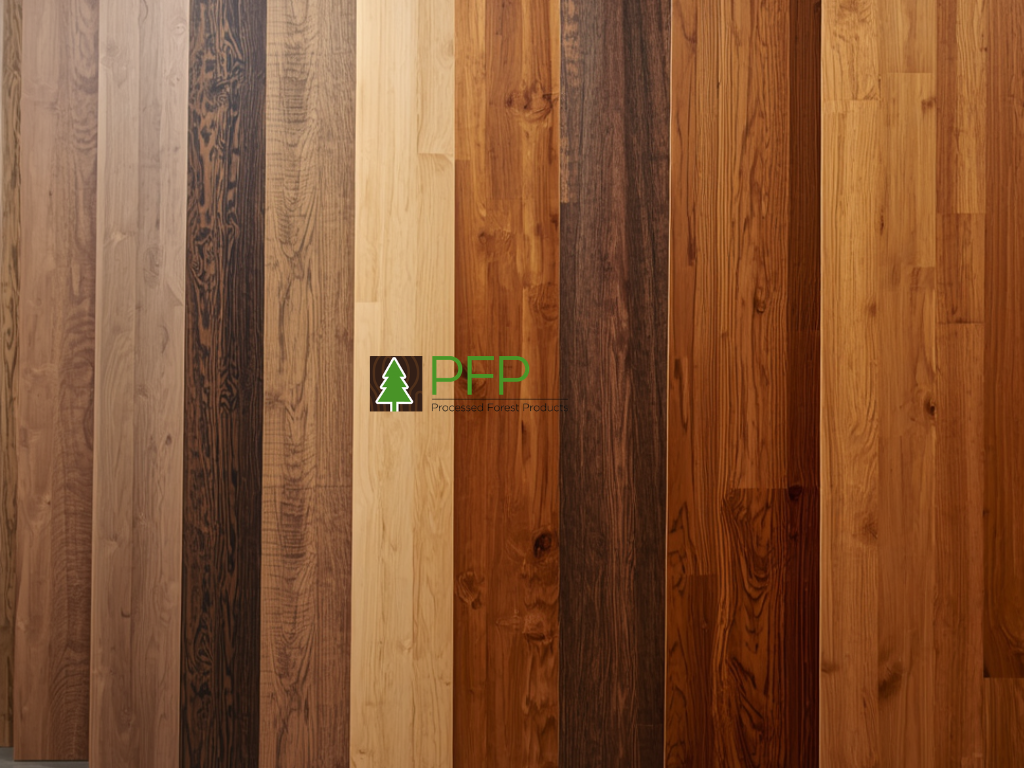
Compare appearance, acoustic documentation and construction together
Choosing the right product means looking at more than a sample board.
Start with the acoustic requirement. Then check the panel construction, substrate, fire information, dimensions, veneer species, grain direction and finish.
Also clarify what the supplier is actually providing.
Terms used online are not always consistent. You may see products described as timber panels, timber wood panel or even the misspelt timber pannel. The wording alone does not tell you whether the product is solid timber, veneered MDF, veneered plywood or a tested acoustic panel.
Ask for the construction in plain terms.
You should know what the face is, what the core is, whether the surface is perforated or slotted, what sits behind it and which parts of the system are included in the acoustic test data.
This makes supplier comparisons much more meaningful.
Ask timber veneer suppliers for samples and specifications
A good sample review should answer more than “Do we like this colour?”
Ask for the veneer species and cut. Confirm whether it is natural or reconstructed. Review the grain pattern and expected natural variation.
For larger walls, discuss how the leaves and panels will be matched.
TVAA’s specification guidance recommends identifying the species, cut, supplier, matching method, grain direction, substrate, edging and finish. It also recommends obtaining indicative finished samples before manufacturing.
This is particularly helpful for timber veneer sydney projects where architects, joiners, acoustic specialists and builders may all be working from the same finish schedule.
A clearly documented sample gives the project team a better reference point than a colour name alone.
Plan Sydney and NSW Projects Before Ordering
Large wall areas need more planning than a single cabinet.
Before asking a timber veneer manufacturer for pricing, calculate the approximate wall area and panel quantities. Provide dimensions, intended grain direction and substrate requirements where these are already known.
TVAA recommends considering veneer availability, required lengths and the total quantity needed, especially when sequence matching forms part of the design.
The supplier should also know whether the order is for a small feature area or a larger commercial project.
For timber veneer nsw projects, transport and handling may also influence the preferred finished panel size.
Do not assume the largest available sheet is automatically best. Installation access, lifts, corridors, site handling, joint locations and the acoustic layout can all influence practical panel dimensions.
Look for relevant manufacturing and sourcing credentials
Supplier comparison should include evidence that relates to what you are buying.
TVAA operates an AFRDI 145 quality-assurance program focused on veneer bond strength, and Processed Forest Products is currently listed among participating manufacturers.
Forest Products also states that it manufactures veneered panels using MDF, particleboard and plywood substrates. Its current product range includes natural and reconstituted veneer as well as board products.
For projects with responsible-sourcing requirements, check the precise certification status of the requested material rather than assuming every product automatically carries certification.
Responsible Wood currently lists Processed Forest Products with an active PEFC chain-of-custody certification covering products including panels, plywood and veneer.
These checks give buyers more useful information than broad claims such as “premium” or “sustainable”.
Know When to Contact Forest Products
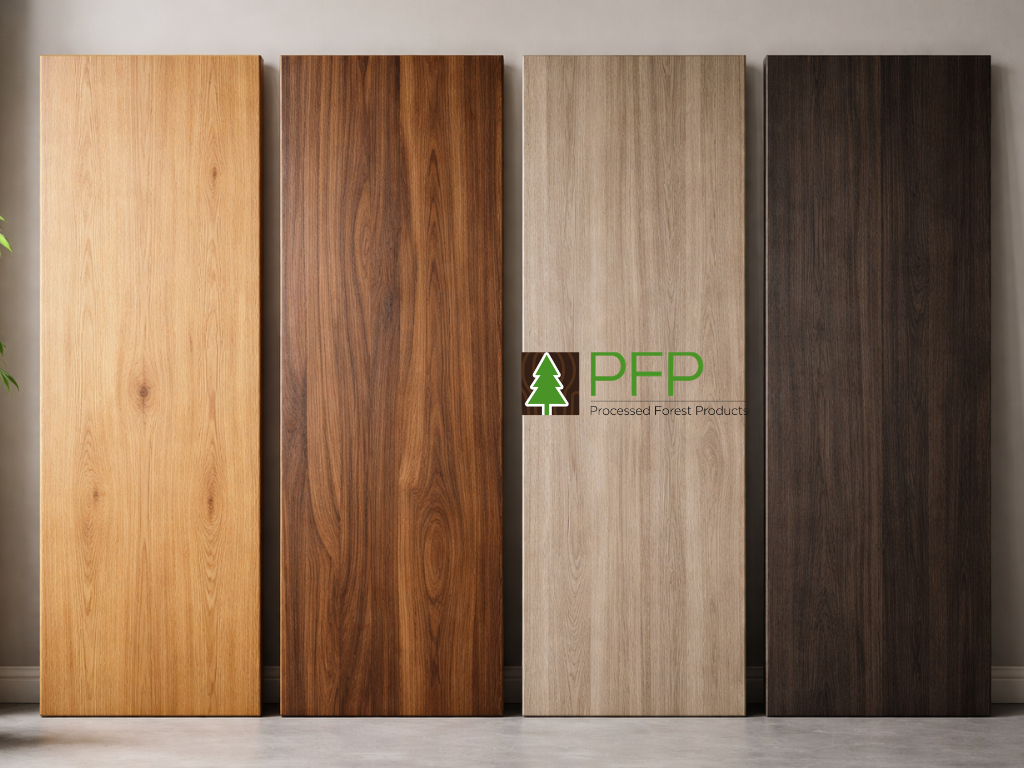
Contact the supplier while specifications can still be adjusted
The best time to speak with a veneer supplier is usually before the final wall-panel specification is locked.
Forest Products is based in Milperra, NSW, and currently offers natural and reconstituted timber veneer. It also manufactures veneered panels on MDF, particleboard and plywood substrates.
If you are considering timber veneer sydney or timber veneer nsw supply, prepare useful project information before making contact.
Explain the application and approximate quantities. Provide intended panel sizes where available. Identify the preferred species, colour direction and grain appearance, or ask to review alternatives if those choices have not been made.
Also mention whether the project has specific substrate, certification, fire or acoustic requirements.
That allows the conversation to focus on the actual specification rather than simply asking for “timber wall panels”.
Separate veneer supply from acoustic-system certification
This distinction is particularly important for this type of project.
Forest Products can be relevant when selecting timber veneer, substrates and veneered panels. However, its current product information does not establish that every veneered panel it manufactures is a tested acoustic wall-panel system.
Therefore, do not assume that a standard veneered timber wood panel will provide a required acoustic result simply because timber is used on the surface.
If the project requires a stated acoustic rating, confirm the tested construction with the acoustic-system provider or relevant project professional.
The same approach should be taken with fire performance.
TVAA advises checking project-specific fire ratings with the supplier or panel manufacturer because veneered wall and ceiling products can use different substrates and constructions.
A successful acoustic wall specification brings these decisions together.
Choose the acoustic system for the required sound-control goal. Select the timber veneer for the architectural appearance. Then confirm substrate, matching, finishing, fire information, panel dimensions and installation before manufacturing starts.
That approach helps create a wall that is considered as a complete system rather than simply a timber finish placed over an acoustic requirement.