Ordering timber veneer may seem straightforward, but small mistakes in product specifications can affect the appearance, cost and completion of a project. Whether you are working on cabinetry, furniture, wall panelling or architectural joinery, choosing the right timber veneer suppliers and confirming the details before purchasing can help prevent unnecessary delays and material waste.
Timber veneer is a thin layer of real wood commonly applied to substrates such as MDF, plywood or particleboard to create a natural timber appearance. It is widely used in residential interiors, commercial joinery, furniture manufacturing and decorative architectural applications.
Unlike many manufactured decorative surfaces, natural timber veneer has variations in grain, colour and figure. These characteristics contribute to its appearance but also mean that selecting materials from a small photograph or general product description may not produce the expected result.
Ordering mistakes commonly involve incorrect timber species, unsuitable sheet dimensions, inconsistent grain matching, overlooked substrate requirements or quantities that do not allow for fabrication.
Understanding what to confirm before placing an order can help cabinetmakers, designers, builders and homeowners select materials that meet their project’s requirements.
What Timber Veneer Suppliers Need Before You Order
Before approaching a supplier, it helps to have a clear description of the intended application.
A cabinetmaker preparing kitchen doors may need different veneer specifications from an interior designer planning a large feature wall.
The supplier will generally need to understand the preferred timber species, veneer type, required dimensions, grain direction and whether the material will be supplied as individual veneer leaves or pressed onto boards.
The desired appearance also matters.
For example, a buyer may want a consistent grain pattern across adjoining cabinet doors or a more natural variation between individual furniture components.
Providing drawings, measurements and reference samples can help communicate these requirements.
If the project involves a particular finish or substrate, these details should be discussed before materials are ordered.
Timber veneer suppliers can provide more relevant product information when the intended use and design expectations are clear.
Why Accurate Specifications Matter for Your Project
An incorrect veneer order can affect more than the appearance of the finished product.
If the selected sheets are too small, additional joins may be necessary. If the grain direction is wrong, the completed cabinet or panel may not match the intended design.
A misunderstanding about substrate thickness can also affect joinery dimensions, hardware installation and assembly.
For larger commercial projects, inconsistencies between adjoining veneer panels may be particularly noticeable.
These issues can require additional fabrication work or replacement materials.
Accurate specifications make it easier for suppliers and fabricators to understand what is required and confirm whether the selected product is suitable.
Before approving an order, it is worth reviewing the product description against the project drawings and intended application.
This is especially important for custom joinery or decorative surfaces where appearance is a major part of the finished design.
Selecting the Right Timber Species and Veneer Type
Choosing the right timber species is one of the most important decisions when ordering decorative veneer.
Different wood veneers offer variations in colour, texture, grain and figure that can significantly influence a finished interior.
When comparing timber veneer suppliers, buyers should understand the differences between natural and reconstructed products and how those differences affect material selection.
Natural Versus Reconstructed Timber Veneers
Natural timber veneer is produced from real timber logs and retains the wood’s individual characteristics.
Depending on the species and cut, natural veneer may display straight grain, cathedral patterns, knots, figuring or variations in colour.
These differences are part of its natural appearance.
Reconstructed or reconstituted veneer is also produced using wood, but the material is processed and assembled to create a more controlled decorative pattern.
Depending on the product, this can provide greater consistency in colour and grain appearance across multiple sheets.
Natural veneer may appeal to buyers seeking individual timber character, while reconstructed veneer may be useful where a project requires a more consistent decorative finish.
Neither option is automatically better for every application.
The choice depends on design preferences, available products, manufacturing requirements and the desired level of consistency.
Buyers should confirm which type they are ordering rather than assuming that all timber veneer products have the same appearance or characteristics.
Checking Colour, Grain and Species Availability
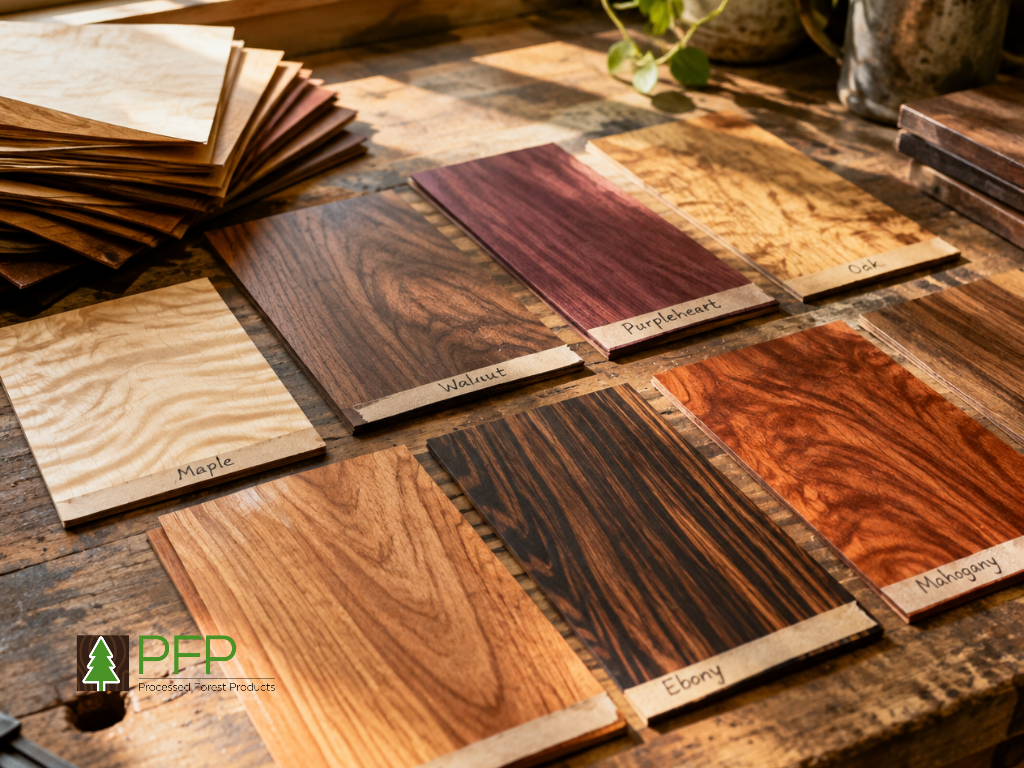
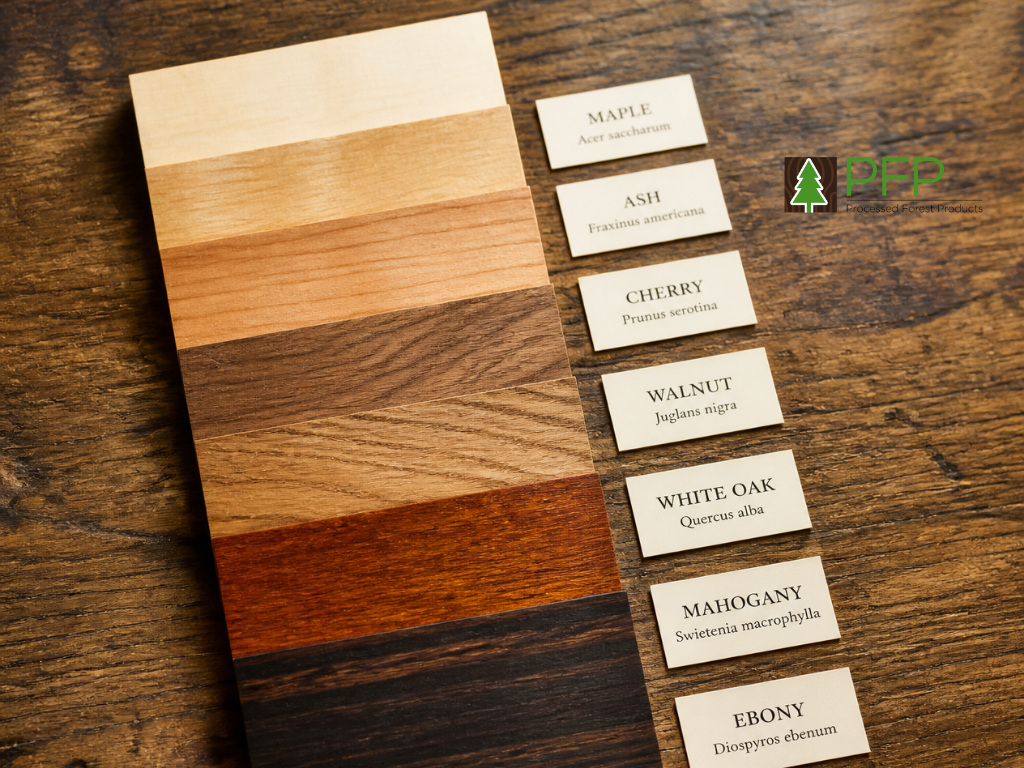
Timber species such as oak, walnut, ash and Australian hardwoods can have different colours and grain patterns.
Even within the same species, natural timber can vary depending on the tree, growth conditions and how the veneer is cut.
Crown-cut veneer generally produces a different grain appearance from quarter-cut or rift-cut material.
These differences should be considered when selecting veneer for cabinets, wall panels or furniture surfaces.
Photographs on websites can be useful for narrowing down options, but screen settings and lighting can affect how colours appear.
Physical samples provide a better opportunity to examine the timber’s actual character.
Where possible, buyers should review samples under lighting conditions similar to those of the finished installation.
It is also worth checking whether the sample represents current stock or is intended only as a general indication of the species.
For larger projects, ask whether sufficient veneer from the same log, batch or compatible material selection is available to achieve the desired appearance.
This helps reduce the risk of discovering inconsistencies after fabrication begins.
Avoiding Mistakes With Sheet Sizes and Quantities
Ordering the correct veneer species is only part of the process.
Dimensions, sheet orientation and material quantities must also be considered before purchasing.
Experienced timber veneer suppliers can help clarify available sizes, but buyers should provide accurate measurements and understand how the material will be fabricated.
Confirming Veneer Dimensions and Grain Direction
Timber veneer is available in different forms, including individual veneer leaves and pre-veneered boards.
Raw veneer leaves vary in dimensions according to the timber species, log and manufacturing process.
Pre-veneered panels generally follow defined board sizes, although available dimensions depend on the supplier and selected product.
A common ordering mistake is assuming that every veneer is available in the same length and width.
For example, a tall cabinet door may require a particular grain length that cannot be achieved using every available veneer leaf.
Before purchasing, confirm the usable material dimensions rather than relying only on nominal sheet sizes.
Grain direction must also be specified.
In Australian veneer specifications, long-band and cross-band arrangements describe the relationship between the panel dimensions and the direction of the timber grain.
This distinction is particularly important for cabinet doors, furniture fronts and wall panels.
A grain direction that differs from the drawings can change the visual appearance of the entire installation.
Dimensions should therefore be provided clearly, with the grain direction identified separately where necessary to avoid misunderstanding.
Calculating Material Quantities and Allowing for Waste
Veneer quantities should be based on the finished components and the material needed to manufacture them.
Measuring the total visible surface area is a useful starting point, but it does not necessarily represent the full quantity required.
Additional material may be needed for trimming, joining, grain matching, damaged sections or fabrication adjustments.
The amount of waste depends on the veneer type, leaf dimensions and the desired pattern.
For example, book matching or sequence matching may require particular leaves to be used in a specific order.
This can limit how efficiently every section of the material can be used.
Likewise, a feature wall with large uninterrupted panels may require longer or more consistent veneer leaves than smaller furniture components.
Buyers should provide a cutting list or panel schedule where possible.
This allows quantities to be considered alongside the proposed grain layout and usable material dimensions.
Ordering a small amount of additional material may be sensible for some projects, but the allowance should reflect the actual fabrication requirements rather than an arbitrary percentage.
Discussing material yield with the supplier or fabricator before ordering can help reduce avoidable waste and shortages.
Understanding Grain Matching and Panel Appearance
Grain matching has a significant influence on the finished appearance of timber veneer.
Two projects using the same wood species can look quite different depending on how the veneer leaves are arranged.
For buyers comparing timber veneer suppliers, understanding matching methods can help prevent unexpected changes in pattern and visual consistency.
Book Matching, Slip Matching and Sequence Matching
Book matching is created by placing consecutive veneer leaves together after turning alternate leaves over, similar to opening the pages of a book.
This creates a mirrored grain pattern.
The result can be particularly noticeable in veneers with strong figuring or prominent grain variations.
Slip matching uses consecutive veneer leaves placed alongside one another without alternating the face in the same way.
This generally produces a repeated grain appearance rather than a mirror image.
Random matching combines veneer leaves to create a less uniform arrangement, which may be appropriate when a more varied natural appearance is desired.
Sequence matching addresses how adjoining panels relate to one another across a larger installation.
For example, an architectural wall may use successive panels arranged so the timber grain progresses visually from one panel to the next.
The method selected affects material planning and the amount of coordination required.
Buyers should confirm the proposed matching technique before manufacturing begins.
A general instruction to supply matching veneer may not provide enough detail for a project where the grain arrangement is important.
Preventing Inconsistent Patterns Across Cabinets and Walls
Large joinery projects can reveal inconsistencies that may be less noticeable in a single sample.
For example, kitchen cabinet doors positioned side by side may appear disconnected if the veneer grain direction or colour differs unexpectedly.
Likewise, an interior feature wall may lose its intended visual continuity if panels are produced from unrelated veneer selections.
To reduce this risk, the grain arrangement should be considered during the design stage.
Drawings can identify the required orientation and arrangement of individual panels.
Where a continuous appearance is important, buyers should discuss whether sequence matching or plan matching is appropriate.
It may also be useful to approve a layout or representative finished sample before fabrication.
Natural timber will still display individual characteristics, and not every project requires perfect grain continuity.
The important point is to establish the intended appearance and confirm that the selected material can reasonably achieve it.
Clearly communicating these expectations helps suppliers and fabricators plan the work more effectively.
Choosing Suitable Substrates and Finishing Methods
Timber veneer is commonly applied to a supporting board or substrate.
The choice of substrate affects the panel’s performance, fabrication requirements and suitability for different environments.
When discussing materials with timber veneer suppliers, buyers should confirm whether they need raw veneer leaves or completed veneered boards, along with any finishing requirements.
MDF, Plywood and Other Veneered Panel Options
MDF, plywood and particleboard are common substrates used with decorative timber veneer.
Each material has different characteristics that may influence its suitability for cabinetry, furniture or interior panelling.
MDF provides a relatively smooth and consistent surface and is frequently used in manufactured joinery.
Plywood consists of bonded wood layers and is available in different grades and constructions for particular applications.
Particleboard is another option commonly used in furniture and interior fit-outs.
However, suitability depends on the board specification, intended use and installation environment.
Buyers should not assume that every substrate is appropriate for moisture-prone areas, heavy loads or applications requiring particular structural performance.
A veneer applied to an unsuitable board can create problems even when the decorative timber layer is of good quality.
The required panel thickness should also be confirmed.
Cabinet hardware, shelving design, edge treatments and joinery dimensions may depend on the final board thickness.
Before ordering, buyers should clarify the substrate type, grade, thickness and whether the veneer is required on one or both faces.
Where relevant, balancing requirements should also be discussed with the manufacturer or fabricator to help manage panel stability.
Checking Adhesives, Edging and Surface Finishes
The final appearance and performance of a veneered product depend on more than the selected wood species.
Adhesives, edge treatments and surface coatings all contribute to the completed component.
The adhesive system used to bond veneer to a substrate should be suitable for the materials and intended conditions.
For applications exposed to moisture, heat or demanding use, the full construction needs to be assessed rather than assuming the veneer itself provides the required resistance.
Edge treatments also affect appearance and durability.
Depending on the project, exposed edges may require matching veneer edging, solid timber lipping or another appropriate treatment.
The selected method should be compatible with the intended design and fabrication process.
Surface finishes can influence colour, grain contrast, gloss and ongoing maintenance.
A clear coating may deepen the appearance of some timber species, while other finishing systems can produce different visual effects.
For this reason, it is advisable to review a finished sample rather than relying only on an unfinished veneer leaf.
The sample should reflect the intended veneer, substrate and coating system where practical.
Confirming these details early helps reduce disagreements about the finished appearance and ensures that the selected materials are suitable for the project.
Checking Supplier Details Before Placing an Order
Product selection is only one part of a successful timber veneer purchase.
Availability, manufacturing requirements, delivery arrangements and quotation details also need to be considered.
When comparing timber veneer suppliers, buyers should confirm what the supplier can provide and how the order will be fulfilled.
Questions to Ask Wood Veneer Suppliers About Stock
Not all wood veneer suppliers carry the same species, cuts, sheet sizes or matching options.
Some suppliers focus on individual veneer leaves, while others provide pre-veneered boards or additional manufacturing services.
A timber veneer manufacturer may also offer pressing, panel preparation or other services that are not available from every distributor.
Understanding these differences can help buyers identify a supplier suited to the project.
Before ordering, ask whether the selected species and cut are available in the required quantity.
For natural veneer, it may be necessary to confirm whether sufficient material from a particular log or compatible batch is available.
Buyers should also establish whether samples can be reviewed and how closely those samples represent the material that will be supplied.
The availability of matching and sequencing services may also influence the supplier choice.
For businesses sourcing wood veneer supplies for cabinetry, furniture or commercial interiors, clear information about product dimensions and manufacturing options can help prevent ordering mistakes.
Where particular sourcing or environmental requirements apply, buyers should request the relevant product documentation rather than assuming every veneer has the same certification status.
Confirming Pricing, Lead Times and Delivery Conditions
A timber veneer quotation should clearly identify what is included.
The price may depend on the timber species, veneer cut, dimensions, matching requirements, substrate and any additional manufacturing work.
An order involving pre-veneered panels may be priced differently from one involving raw veneer leaves.
Buyers should confirm whether the quotation includes the required quantity, substrate specification, matching arrangements and any additional services.
Delivery charges and handling requirements should also be discussed.
Timber veneer can be vulnerable to physical damage if it is handled or stored incorrectly.
The supplier’s packaging and delivery arrangements should therefore be appropriate for the product.
For buyers sourcing timber veneer Sydney or timber veneer NSW products, location can affect freight costs and delivery planning.
Local availability may be convenient, but the final decision should still consider product suitability, pricing and the supplier’s ability to meet the specifications.
Lead times should be confirmed before committing to installation or fabrication schedules.
Some products may be available from existing stock, while other requirements may involve additional processing or sourcing.
Where several stages of manufacture are involved, the buyer should understand when the material is expected to be ready.
It is also worth confirming procedures for reporting delivery damage, shortages or discrepancies before fabrication begins.
Reviewing the delivered materials against the order details can help identify problems before they affect the project.
Final Checks for a Successful Timber Veneer Order
A successful timber veneer project begins with clear communication between the buyer, supplier and fabricator.
The best approach is to confirm the material and manufacturing requirements before the order is approved.
Timber veneer suppliers can provide useful guidance, but accurate drawings, realistic quantities and clear expectations remain important responsibilities for the buyer.
Reviewing Specifications With Timber Veneer Suppliers
Before placing an order, review the selected species, veneer type and intended appearance.
Confirm whether the material is natural or reconstructed and whether the available stock is suitable for the required level of consistency.
Check the veneer cut, usable dimensions and grain direction against the project drawings.
Where matching is important, confirm the intended technique and whether the required sequence can be supplied.
For pre-veneered boards, review the substrate, panel thickness, edging and finishing requirements.
The order quantity should also account for the cutting and matching requirements of the project.
If a particular sample has been approved, establish how that sample relates to the material being supplied.
For larger projects, written confirmation of the specifications can help prevent misunderstandings between the designer, supplier and manufacturer.
It is also important to check the final quotation, delivery arrangements and expected availability.
Where any detail remains unclear, resolving it before manufacturing begins is generally more practical than making changes after the materials have been prepared.
Choosing the Right Veneer Products for Your Project
The right veneer depends on the intended application, desired appearance and manufacturing requirements.
A cabinetmaker preparing kitchen joinery may prioritise consistent panel dimensions and grain matching.
An interior designer planning decorative wall panels may place greater emphasis on colour, figure and visual continuity.
Furniture manufacturers may need particular veneer cuts, matching arrangements and substrates suited to their fabrication processes.
These differences make clear specifications essential when comparing products.
Forest Products, also known as Processed Forest Products, supplies natural and reconstituted timber veneers for the Australian market.
Its published timber veneer range includes products such as American Walnut, European Oak, Blackbutt and other decorative species, with options varying by cut, appearance and dimensions.
The company also lists board products and manufacturing capabilities relevant to joinery and interior applications.
Buyers can explore the Forest Products timber veneer range to review available products and compare their characteristics.
For projects requiring particular veneer dimensions, matching arrangements or substrate specifications, discussing these details directly with the supplier can help establish what is available.
Visit Forest Products to learn more about its products, or use the contact page to enquire about timber veneer options and request information for your project.
Taking the time to confirm species, dimensions, grain matching, panel construction and delivery requirements can help prevent avoidable ordering mistakes.
With clear specifications and suitable materials, cabinetmakers, designers and other buyers can approach timber veneer projects with greater confidence in the finished result.