Modern interior design increasingly combines natural-looking materials with clean lines, practical layouts and carefully selected finishes. Timber wall panelling works well with these approaches because different woodgrain patterns, colours and textures can complement a wide range of interior styles.
Whether you are renovating a living room, designing an office reception area or selecting materials for a commercial fitout, understanding the differences between timber products can help you make better choices.
This guide explores modern timber wall design ideas, popular panel arrangements, surface finishes and important material considerations for residential and commercial projects across Australia.
Timber has remained a familiar material in Australian building and interior design because of its natural appearance and versatility. Modern timber panels allow designers to introduce woodgrain, texture and visual depth into rooms without necessarily covering every surface in solid timber.
They can be used as subtle decorative features or as prominent wall finishes that establish the character of an entire space.
How Timber Panels Add Warmth, Texture and Character
One of the main attractions of timber pannel is its ability to introduce texture into an otherwise simple interior.
Painted walls provide a uniform appearance, while timber surfaces display grain patterns, tonal variations and visual detail that can make a room feel more inviting.
Lighter finishes can complement contemporary Australian coastal interiors, especially when paired with neutral colours, natural fabrics and soft furnishings.
Medium timber tones often work well in living rooms and dining areas where a warmer atmosphere is preferred. Darker finishes can create contrast in minimalist interiors or establish a more distinctive feature in larger spaces.
The appearance also depends on the type of timber and the finish applied.
Natural timber veneer can preserve the visual characteristics of real wood, while decorative woodgrain surfaces can provide a more consistent appearance.
Choosing the right timber panels involves considering how the material will work with the room’s flooring, furniture, lighting and surrounding finishes.
Modern Wall Panelling for Homes and Commercial Spaces
Timber panelling can be incorporated into many different interior environments.
In residential properties, feature walls are commonly considered for living rooms, bedrooms, hallways and entertainment areas. A timber wall behind a television or bedhead can introduce visual interest without requiring extensive changes to the room.
In commercial interiors, timber panels may be used in reception areas, meeting rooms, hospitality spaces and retail environments.
For example, a timber feature wall behind a reception counter can help establish a welcoming appearance while complementing other joinery and interior finishes.
The size of the installation matters. Covering every wall in timber may make a compact room feel visually busy, particularly when darker colours or pronounced grain patterns are used.
A carefully positioned feature wall can provide contrast while maintaining balance with the surrounding interior.
Before selecting a design, consider the room’s proportions, natural light and the way people will experience the space.
Modern Timber Wall Panel Designs Worth Exploring
Timber wall panelling offers a variety of design possibilities, from simple flat surfaces to decorative arrangements featuring repeated lines, contrasting grain directions and integrated architectural details.
The best design depends on the room’s dimensions, intended appearance and practical requirements.
Slatted Timber Panels for Contemporary Feature Walls
Slatted timber panels have become a familiar feature of contemporary residential and commercial interiors.
Their repeated vertical or horizontal lines can introduce rhythm and depth while maintaining a relatively simple appearance.
Vertical slats are often used behind televisions, bedheads and reception counters. They can draw attention upwards and create the impression of additional height, particularly when the design extends from floor to ceiling.
Horizontal slats can produce a different effect by emphasising the width of a wall.
Spacing also influences the result. Narrow gaps can create a more continuous surface, while wider spacing produces stronger visual separation between individual timber elements.
However, decorative slats should not automatically be described as acoustic panels. Sound absorption depends on the construction of the complete system, including any backing materials, cavities and tested acoustic performance.
For Australian interiors, slatted timber panels can work well with plasterboard walls, stone surfaces, glass partitions and minimalist furniture.
The key is to select proportions and finishes that suit the surrounding architecture rather than introducing unnecessary visual complexity.
Full-Height Panelling, Half Walls and Decorative Features
Full-height timber panelling creates a continuous feature from floor to ceiling.
This approach can be effective in entrance areas, living rooms and commercial reception spaces where the wall is intended to become a prominent design element.
Half-height panelling provides another option, particularly for hallways, bedrooms and smaller rooms.
By covering only the lower portion of a wall, homeowners can introduce texture while retaining a painted surface above.
Decorative timber sections can also be used to frame architectural features such as shelving, entertainment units and built-in furniture.
A timber wood panel finish may be incorporated into cabinetry and surrounding wall surfaces to create a coordinated appearance.
For a balanced result, consider how panel joints, edges and transitions will meet adjoining materials.
Well-planned timber panels should complement the overall interior rather than appear as an unrelated decorative addition.
Choosing the Right Timber Panels and Surface Finishes
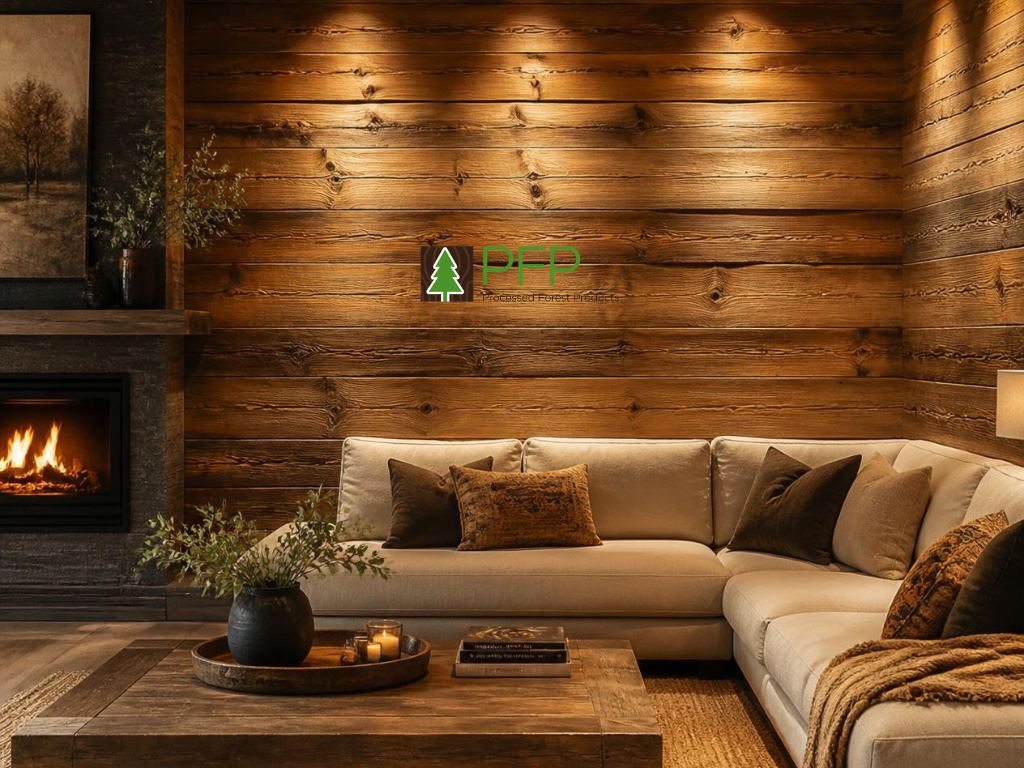
Not all timber wall panels are constructed in the same way.
Products described as timber panelling may include solid timber boards, natural timber veneer bonded to engineered substrates, decorative laminates and other manufactured wood-based materials.
Understanding these differences is important because appearance, cost, installation and maintenance requirements can vary.
Solid Timber, Engineered Panels and Timberwood Panels
Solid timber panels are made from natural timber, while engineered panels are manufactured using wood-based materials such as plywood, medium-density fibreboard or particleboard.
Solid timber offers natural grain and texture throughout the material, although it can expand and contract as surrounding moisture conditions change.
Engineered panels can provide more consistent dimensions and surfaces, depending on their construction and intended application.
Timber veneer panels combine a thin layer of natural timber with a supporting substrate. This allows designers to achieve a genuine woodgrain appearance without relying on solid timber for the entire panel thickness.
Products marketed as timberwood panels or timber wood panels may describe different constructions depending on the supplier. The product name alone does not establish whether the panel contains solid timber, veneer or a decorative surface.
Before purchasing, check the substrate, panel thickness, available dimensions and recommended applications.
For larger wall installations, the weight of the panels and the method of fixing them to the supporting structure should also be considered.
Selecting an appropriate construction helps ensure the finished wall suits both the design and the practical requirements of the project.
Veneer Laminate and Decorative Timber Finishes
Surface finish plays an important role in the appearance and maintenance of timber wall panels.
Natural timber veneer displays real woodgrain, including variations in colour and pattern. These characteristics are often valued in architectural interiors where a more natural appearance is desired.
A veneer laminate or prefinished timber-veneered panel may offer a decorative timber surface supplied with a particular backing, coating or finishing system.
Decorative woodgrain laminates provide an alternative for projects requiring a more consistent pattern or specific surface characteristics.
The distinction matters because natural veneer and printed woodgrain laminate are not identical materials.
Natural veneer may require appropriate protective finishing, depending on the product supplied. Decorative laminates have their own cleaning, durability and installation requirements.
For example, a busy commercial reception area may place greater emphasis on surface durability and cleaning, while a residential feature wall may prioritise grain character and natural appearance.
When comparing timber panels, request samples and assess them under the lighting conditions expected in the finished room.
A small digital image may not accurately represent the grain, colour variation or surface texture of the installed material.
Matching Timber Colours, Grain and Texture to Your Space
The colour and grain of timber can influence how a room feels, even when the wall layout remains unchanged.
A light timber surface may create a softer, more open appearance, while darker finishes can establish contrast and visual depth.
Choosing the right combination involves considering the broader interior rather than selecting a panel based only on its appearance in isolation.
Light, Medium and Dark Timber Panels for Different Interiors
Light timber finishes are often associated with contemporary coastal, Scandinavian and minimalist interiors.
They can complement white walls, neutral fabrics, pale flooring and natural stone surfaces.
For Australian homes with generous natural light, lighter timber panels can help maintain a relaxed and understated appearance.
Medium timber tones can introduce warmth while remaining compatible with a wide range of furnishings.
These finishes may work well in dining rooms, living areas and offices where a balanced appearance is preferred.
Darker timber finishes can create a more dramatic effect, particularly when used against lighter surrounding walls.
However, using extensive dark panelling in a small or poorly lit room can make the space appear visually heavier.
Consider using darker finishes selectively, such as behind a bedhead or within a reception feature wall.
When selecting timber panels, compare the colour with existing flooring and cabinetry to avoid unintended clashes between different wood tones.
Using Timber Grain, Texture and Panel Direction
Timber grain is an important part of the material’s visual character.
Straight grain patterns can create a clean, contemporary appearance, while more varied grain patterns may introduce greater movement and individuality.
The orientation of the panels can also influence the room’s proportions.
Vertical grain arrangements may emphasise ceiling height, while horizontal patterns can make a wall appear wider.
For larger installations, the relationship between adjacent panels deserves attention.
Random grain placement can produce a natural, varied appearance, while carefully matched veneer sheets can create more deliberate patterns.
Book matching, for example, involves arranging adjacent veneer leaves to create a mirrored grain effect. Slip matching positions consecutive veneer leaves in the same orientation, producing a different visual result.
Surface texture also matters.
Smooth finished timber panels may suit modern interiors, while more pronounced textures can introduce a rustic or tactile quality.
The best result usually comes from balancing the timber surface with other materials, such as painted plasterboard, upholstery, glass or stone.
Timber Feature Wall Ideas for Different Rooms
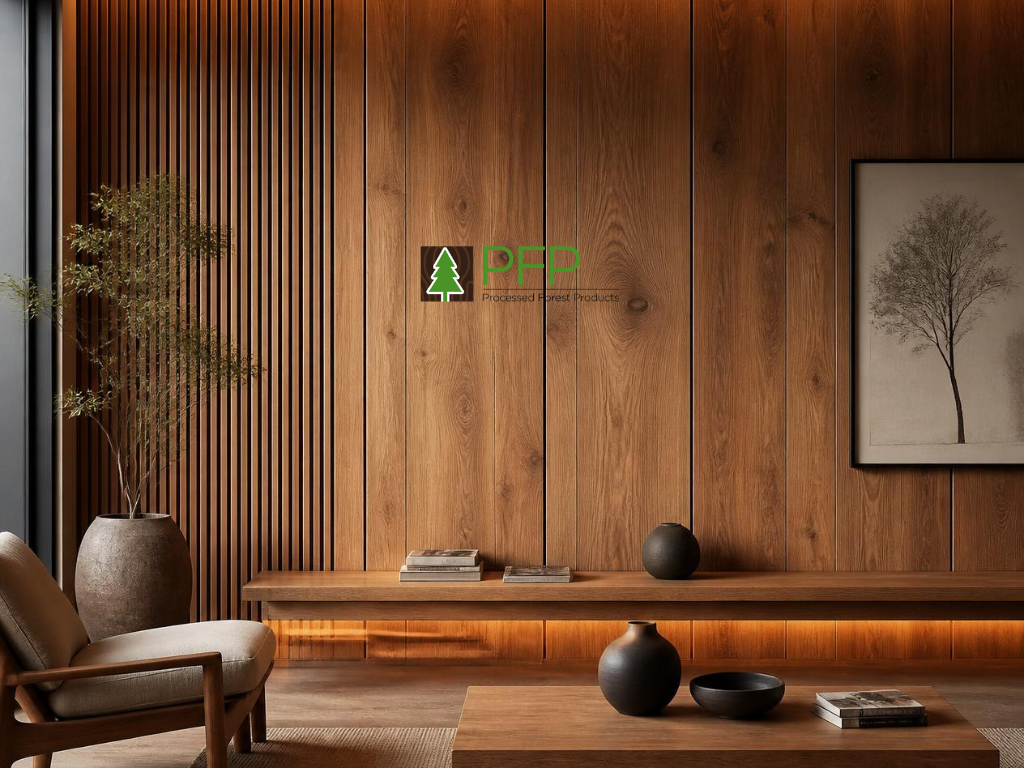
Timber feature walls can be adapted to suit a range of residential and commercial interiors.
Rather than covering every available wall, designers can use timber selectively to highlight important areas and create a coordinated appearance.
Living Rooms, Bedrooms and Hallway Feature Walls
In living rooms, timber panels can provide an attractive background for entertainment units, shelving and television installations.
A full-width timber feature wall may help visually connect built-in cabinetry with the surrounding room.
For smaller living spaces, partial wall panelling can introduce warmth without dominating the interior.
Bedrooms provide another opportunity for decorative timber finishes.
A timber feature behind the bed can act as a visual headboard, especially when paired with suitable bedside lighting and coordinated furniture.
In hallways, vertical timber panelling can introduce texture to otherwise plain surfaces.
However, narrow spaces require careful consideration of panel thickness and projections, particularly where the installation could reduce circulation space.
Timber finishes should also be selected according to expected contact and cleaning requirements.
For example, a hallway wall exposed to frequent movement may benefit from a suitable protective finish that is easy to maintain.
When planning timber panels for residential interiors, measure the wall carefully and consider power outlets, switches, skirting boards and other existing features before installation.
Offices, Retail Spaces and Hospitality Interiors
Commercial interiors often use timber finishes to establish a consistent visual identity.
Reception areas, meeting rooms and customer-facing spaces can benefit from decorative wall panelling that complements surrounding joinery and furnishings.
For example, a timber feature wall may help define a reception desk area while creating a more welcoming environment for visitors.
Retail businesses may use timber panels behind product displays or service counters.
In hospitality interiors, timber finishes can complement seating, lighting and other decorative materials.
However, commercial projects require additional consideration of durability, cleaning and building compliance.
Materials used in high-traffic locations should be appropriate for the level of wear expected.
Where acoustic performance is important, timber-based wall systems should be selected using relevant acoustic testing or technical information rather than their decorative appearance alone.
Commercial timber panels must also be assessed for applicable fire safety requirements, which may differ from those affecting ordinary residential feature walls.
Understanding these requirements before installation helps avoid selecting products that may be unsuitable for the intended location.
Fire Safety and Material Selection for Commercial Interiors
Fire safety is an important consideration when specifying timber wall finishes for commercial buildings.
Although timber panels can provide an attractive architectural finish, their suitability depends on the proposed application, product construction and relevant building requirements.
Decorative timber products should not automatically be assumed to provide fire resistance or comply with every commercial wall lining requirement.
Understanding Fire Rated Board and Wall Lining Requirements
The National Construction Code establishes fire hazard requirements for wall and ceiling linings in relevant building classifications.
For commercial and other applicable buildings, the required performance can depend on the building classification, whether sprinkler protection is provided and where the material is installed.
The NCC uses Group Numbers to classify the fire hazard performance of wall and ceiling lining materials, with assessment requirements specified through AS 5637.1.
This distinction matters for products such as veneer-faced boards, slatted timber systems and composite panels.
A fire rated board may be manufactured or assessed for a specific fire-related application, but the description alone does not establish that it is suitable for every wall or ceiling.
The substrate, adhesive, surface finish and installation arrangement may all influence the performance of the finished system.
For commercial projects, architects, builders and other relevant professionals should review current product documentation and confirm compliance with the applicable NCC requirements.
Where necessary, obtain fire test reports and evidence supporting the intended installation.
Selecting timber panels with appropriate supporting documentation helps reduce uncertainty before construction begins.
Fire and Smoke Doors Versus Decorative Timber Panelling
Decorative timber wall panels and fire and smoke doors perform different functions within a building.
A wall panel is generally selected to provide an architectural finish, while a fire door materials forms part of a building’s fire safety system.
Required fire doors are subject to specific construction and performance requirements. Under the NCC 2022 provisions, required fire doors must comply with AS 1905.1, while smoke doors are subject to separate requirements intended to restrict smoke movement.
A timber veneer finish may be incorporated into an appropriately assessed door assembly, but this does not mean an ordinary timber panel becomes fire-rated when attached to a door.
For projects where doors and adjacent walls require a consistent appearance, designers may explore compatible veneer finishes while maintaining the required performance of each assembly.
This can provide visual continuity between timber wall panelling and architectural doors without compromising the distinction between decorative materials and fire safety components.
Before specifying materials for fire-related applications, confirm the relevant technical requirements with the project designer, building certifies or another appropriately qualified professional.
How to Choose the Right Timber Panels for Your Project
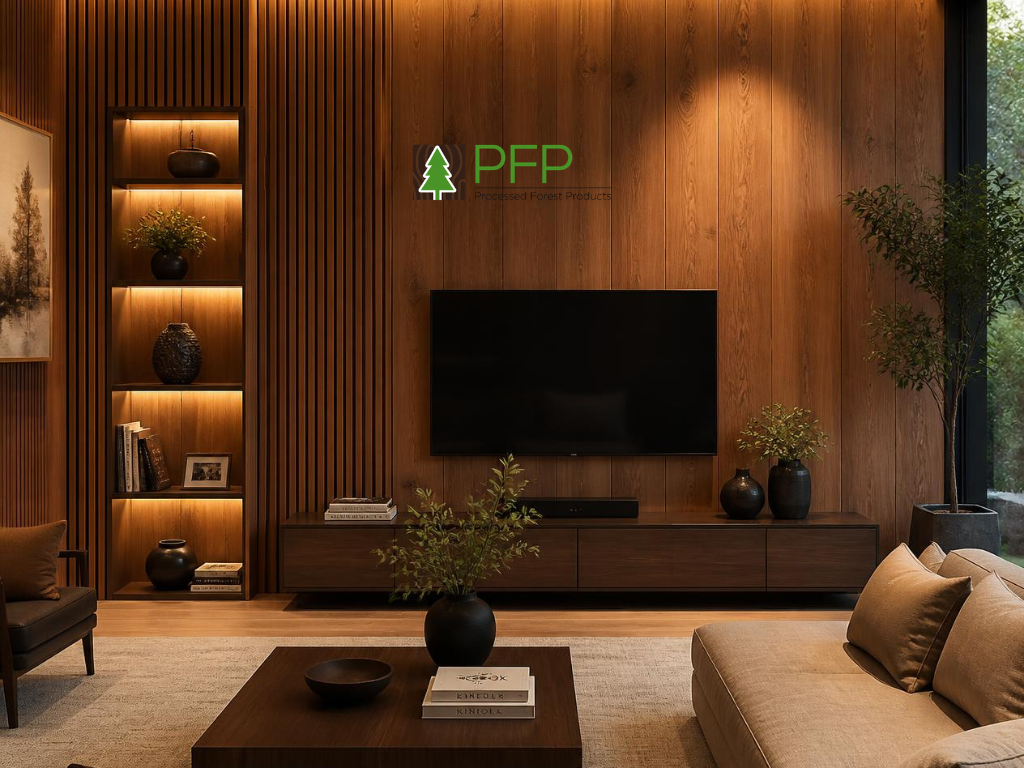
Selecting timber wall panels involves balancing appearance, material performance, installation requirements and budget.
The most suitable product is not necessarily the most expensive or visually distinctive option. It is the one that meets the intended use while complementing the overall interior design.
Comparing Panel Construction, Dimensions and Finishes
Before ordering timber panels, establish the dimensions of the wall and the type of finish required.
Panel thickness affects weight, edge detailing, fixing requirements and the way the finished surface meets adjoining materials.
Larger panel formats may reduce the number of visible joints, although installation access, handling and potential material wastage should also be considered.
Substrate selection is another important factor.
MDF, particleboard and plywood can offer different properties, including variations in weight, machinability, moisture behaviour and fixing performance.
Where the panels will be exposed to moisture or changing humidity, confirm that the selected material is suitable for those conditions.
Surface finish should also be considered carefully.
Natural timber veneer can provide distinctive grain and colour variations, while decorative laminates may offer different appearance and maintenance characteristics.
For feature walls where visual continuity matters, ask whether veneer matching or a particular grain arrangement is available.
Installation planning should account for wall condition, panel weight, fixing systems, movement allowances and access to concealed services.
When comparing timber panels, requesting physical samples and relevant product specifications can help confirm whether the material meets the project’s requirements.
Choosing a Timber Panel Supplier in Australia
Working with a suitable supplier can make it easier to compare panel construction, decorative finishes and available manufacturing options.
For residential renovations, homeowners may need guidance on veneer selection, panel dimensions and suitable finishes.
Architects, cabinetmakers and commercial fitout professionals may require more detailed information about substrates, technical documentation, manufacturing capabilities and consistency across multiple panels.
Forest Products, operating as Processed Forest Products, supplies timber veneer, boards, laminates and custom-manufactured architectural products from its facility in Milperra, Sydney.
Its product range includes natural and reconstituted timber veneer, along with MDF, particleboard and plywood substrates. The company also provides PUR lamination services for a range of decorative surfaces and board applications.
For projects requiring coordinated doors and wall finishes, its architectural door manufacturing capabilities include veneer matching with corresponding wall panels where appropriate.
These services may be useful for interior designers, builders and joiners seeking consistent finishes across architectural features.
Before placing an order, discuss the intended application, preferred timber appearance, panel dimensions and any relevant technical requirements.
For commercial projects, confirm that the selected products have the documentation needed to assess their suitability for the proposed installation.
Timber panels can introduce warmth, texture and character into Australian homes, offices, retail spaces and hospitality interiors. From natural timber veneer feature walls to decorative panel arrangements, the right material and finish can help create a cohesive interior.
The most successful results come from choosing panels that suit the room’s proportions, lighting, expected use and maintenance requirements.
If you are planning a residential renovation, commercial fitout or custom joinery project, contact Forest Products to discuss available timber veneer, board and laminate options.
With suitable material selection, thoughtful design and appropriate technical advice, timber wall panelling can provide an attractive and practical finish for a wide range of interior applications.