Choosing timber veneer from a website, catalogue or small digital image can give you an idea of the colour and general character of a species, but it cannot fully show what the material will look like once it becomes part of a finished interior.
Timber veneer is made from real wood, so colour, grain, figure and other natural characteristics can vary. The way the log is cut, how individual veneer leaves are matched, the direction of the grain, the substrate underneath and the final coating can all change the appearance of a completed panel.
For architects, designers, cabinetmakers, builders and homeowners comparing timber veneer suppliers, requesting a sample before approving a larger order is therefore more than a design preference. It is an opportunity to check whether the selected material actually suits the project before cabinetry, doors, furniture or wall panels enter production.
The Timber Veneer Association of Australia recommends requesting samples of available stock when selecting a species and specifies that indicative finished samples should be supplied before manufacturing where appropriate. It also recommends confirming the veneer species, cut, batch, matching method, grain direction, substrate and finish.
Natural colour and grain can vary between pieces
One of the main reasons to request a timber veneer sample is simple: wood is a natural material. Even when two veneer leaves come from the same species, they may not look identical. Differences can occur in colour, grain width, figure and natural markings. The Timber Veneer Association of Australia notes that natural veneer can vary from log to log and recommends discussing colour, figure and other natural characteristics with the supplier before specification.
That variation is not automatically a defect. In many projects, it is part of the reason timber veneer is selected in the first place.
However, the amount of variation that works well on a feature wall may be different from what is wanted across a row of matching cabinet doors.
A sample gives the designer or buyer a much better reference point than a photograph alone, but it is also important to remember that one small piece does not guarantee every final panel will look exactly the same. With natural wood veneers, the sample should be used to understand the expected character and range rather than as a promise of perfect uniformity.
For larger projects where consistency is particularly important, the discussion may need to move beyond a general species sample to the actual batch, flinch or veneer sequence intended for the project.
Screens cannot reproduce the material perfectly
Digital images are useful during early product research, particularly when comparing several timber veneer suppliers, but screen-based selection has limitations.
The appearance of a timber photograph can change depending on photography, lighting, image editing, monitor settings and even the brightness or colour settings of the device being used.
The surrounding materials matter too.
A light veneer may look noticeably different beside a dark stone bench top than it does beside white paint. Likewise, flooring, fabrics, metal finishes and artificial lighting can change how warm or cool a timber tone appears within a room.
This is why physical samples are particularly useful during an interior-design process. They allow the veneer to be viewed beside the materials that will actually appear in the project and under the lighting conditions that are likely to be used.
For a residential cabinet, that may mean placing the sample beside flooring and bench top samples. For commercial joinery, it could mean viewing it alongside wall finishes, upholstery, signage and other specified materials.
Check the Veneer Cut and Grain Pattern in Person
Choosing the species is only part of timber veneer selection. The way the log is sliced can substantially change what the finished surface looks like.
The Timber Veneer Association of Australia identifies crown cut, quarter cut and rotary cut among the main options. Quarter cutting generally creates a straighter grain appearance, while crown cutting produces a different, more figured pattern. Rotary peeling can create broader, swirling grain effects.
This means that two samples labelled with the same timber species may still look quite different.
If a designer simply writes the species name on a specification without considering the cut, there is room for the delivered material to differ from the design expectation.
A physical sample makes the distinction much easier to understand.
Rather than trying to imagine what terms such as crown cut or quarter cut will look like across cabinetry, the buyer can see the grain structure directly and decide which approach suits the interior.
This is especially valuable when a timber veneer manufacturer can offer several cutting or matching options for the same design direction.
Grain direction changes the appearance of larger surfaces
The direction in which veneer grain runs can also have a major visual effect.
On a tall cabinet door, vertical grain can emphasise height. On a long reception desk or horizontal wall panel, another grain direction may better support the overall design.
In Australian veneer specification, panel dimensions and grain direction need to be clearly understood. TVAA explains that long-band and cross-band arrangements describe how grain direction relates to panel dimensions and recommends clarifying the direction whenever there could be uncertainty.
That matters increasingly as the panels become larger.
A small timber veneer sample cannot reproduce an entire wall elevation, but it can help establish the grain character that will be repeated across the finished installation.
For custom joinery, doors or feature panels, ask how the sample relates to the proposed panel orientation before placing the order.
This simple discussion can prevent the correct veneer from being installed in a visual direction that was never intended.
See How Matching Changes the Finished Surface
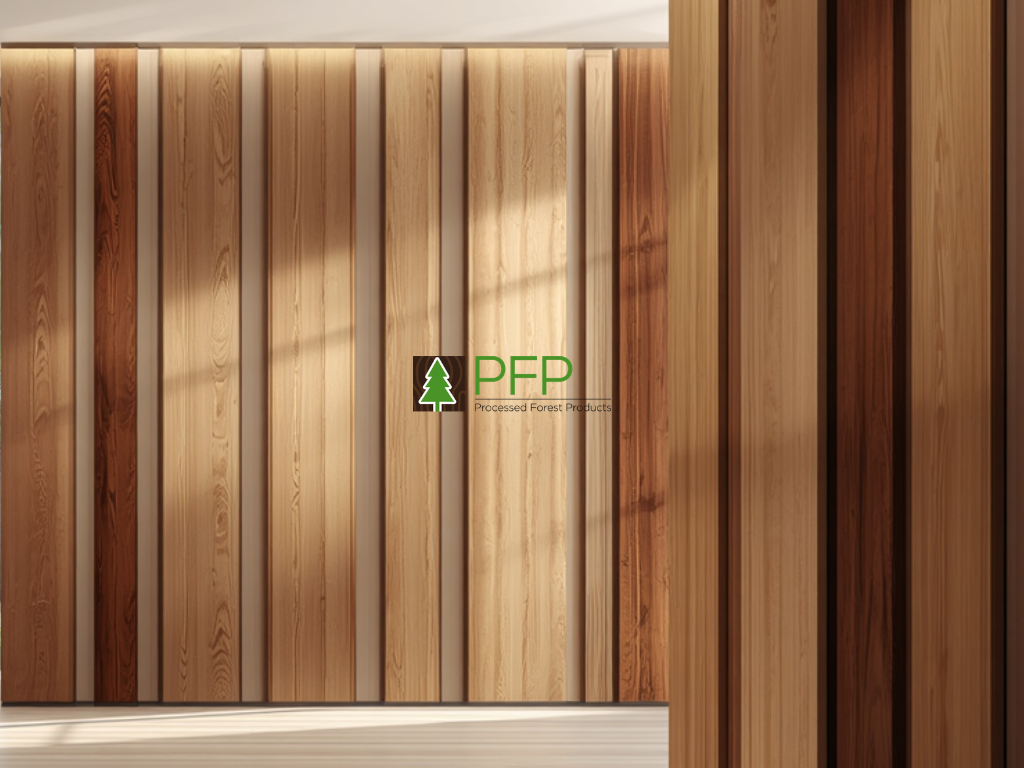
Book matching and slip matching produce different results
After veneer leaves are cut, they can be arranged in different ways to create the finished face of a panel.
Book matching places adjoining leaves in a mirrored arrangement, producing a repeated symmetrical effect. Slip matching places successive leaves alongside one another in the same orientation, producing a different visual rhythm.
Other arrangements are also possible, and each can influence how much symmetry or natural variation is visible.
This is why someone comparing wood veneer suppliers should not look only at species and price. Matching capability can be just as important when appearance matters.
A timber veneer sample showing the proposed matching method gives architects, joiners and clients a clearer idea of the intended effect before a larger surface is produced.
It is particularly helpful for reception counters, meeting-room walls, feature panels, doors and cabinetry where several veneer leaves will be visible together.
The Timber Veneer Association of Australia specifically recommends identifying the matching method as part of the veneer specification.
Large installations may require sequence matching
For larger projects, the relationship between one panel and the next can become important.
Sequence matching involves arranging veneered panels so that the natural progression of grain continues across adjoining surfaces. TVAA explains that sequence-matched panels can create a progression from one panel to another, while more detailed plan matching can coordinate panels, doors and other components to achieve greater grain continuity.
This requires more planning than selecting a small colour swatch.
The supplier may need information about panel dimensions, quantities, layouts and installation sequences before determining how the veneer should be prepared.
TVAA also notes that some detailed matching approaches require greater site coordination and longer lead times.
For this reason, a large joinery or wall-panel project should not wait until manufacturing begins to discuss matching.
If continuous grain or coordinated panels are an important part of the design, raise that requirement with the supplier when requesting samples.
The sample stage is the right time to confirm whether the preferred appearance can realistically be achieved within the available material, budget and project program.
Review the Substrate and Finish Along With the Veneer
Timber veneer is generally pressed onto a supporting board rather than used by itself.
Common substrates include MDF, particleboard and plywood. The Timber Veneer Association of Australia recommends identifying the substrate as part of the veneer specification because different panel constructions suit different applications.
When reviewing wood veneer supplies, therefore, ask whether you are looking at a loose veneer leaf or a sample of the complete panel construction.
A thin raw veneer sample may be enough for initial species selection, but it will not necessarily show exactly how the finished panel will look once the veneer has been pressed, edged and coated.
Forest Products currently supplies natural and reconstituted veneers together with MDF, particleboard and plywood board options from its Milperra facility in Sydney. Its published board range also includes different sizes and thicknesses, depending on the particular substrate.
For a timber veneer Sydney project, that means the conversation should include both the visible veneer and the board construction underneath it.
Finishing can noticeably change colour and sheen
The finish applied to timber can change its appearance.
A clear coating may deepen the colour or make grain more pronounced, while differences in gloss level can change the way light reflects from the surface. Stains and other finishing systems can create an even larger visual difference.
That makes a finished sample particularly valuable when colour accuracy matters.
TVAA recommends identifying polish type, gloss level and whether the finish has an open or filled grain, while also recommending an indicative finished sample before manufacturing.
Imagine approving an unfinished pale timber sample because it perfectly matches the design palette, only to discover that the selected coating makes it noticeably warmer.
Testing the intended finish on representative veneer before the main order can reduce that risk.
When the finished appearance is critical, ask whether the sample can reflect the same veneer, substrate and coating system proposed for the actual project.
Use Samples to Compare Similar Veneer Options
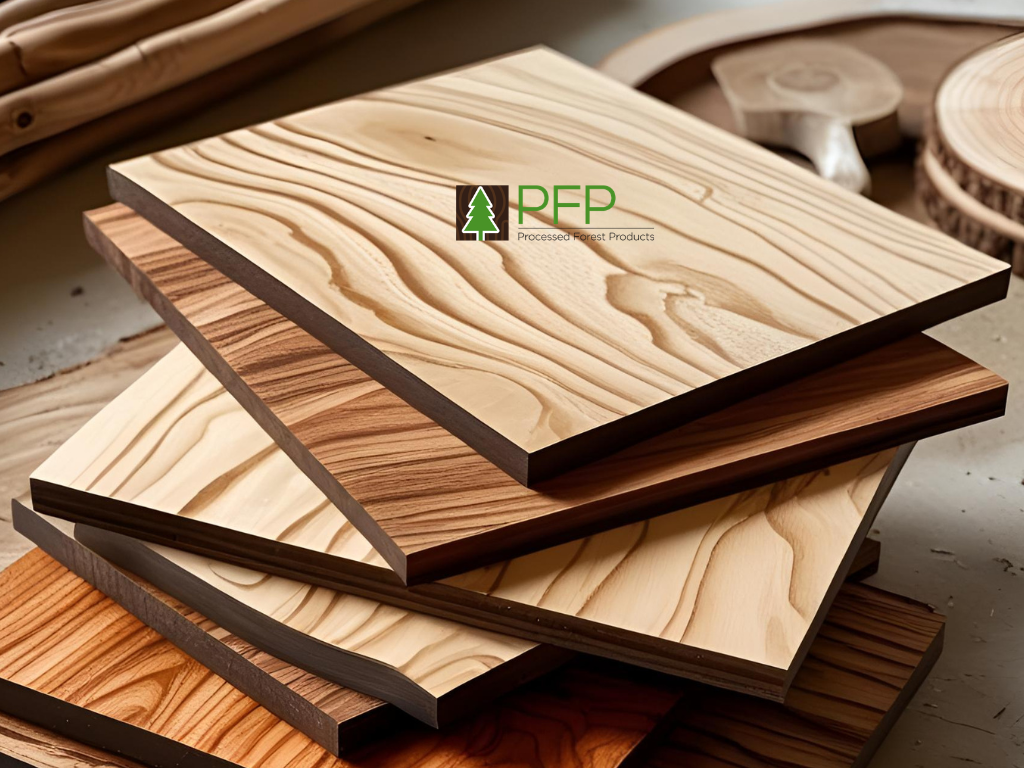
Put alternative species beside each other
Sometimes the first veneer selected is not the final one.
The preferred species may be unavailable in the quantity required, outside the budget or visually different from what was expected once a physical sample is viewed.
This is where sampling becomes particularly useful.
Instead of assessing wood veneers from separate catalogue pages, place alternatives beside one another and compare colour, grain, natural variation and how each option interacts with other project materials.
A designer may discover that a slightly different species achieves the intended appearance more successfully. Another project may benefit from a reconstituted veneer where greater consistency is preferred.
Forest Products currently lists both natural and reconstituted timber veneer options and describes the veneers shown online as a non-exhaustive sample of its range, inviting customers to contact the company for additional samples.
That makes sample comparison a practical stage in product selection rather than something that should happen only after a specification has already been locked in.
Ask about alternatives when availability or budget changes
Veneer comes from a natural resource, so availability is not unlimited in the way a printed pattern can be reproduced indefinitely.
For natural veneer, the quantity available from a particular log or batch can influence what is possible on a larger project.
TVAA recommends considering the lengths required, the amount needed for the job and whether sheets need to be sequence matched. It also notes that suppliers can help identify species appropriate to the project’s needs and budget.
If your first-choice veneer is difficult to source in sufficient quantity, ask the timber veneer manufacturer what alternatives are available before changing the design completely.
There may be another natural species with a comparable tone, a different cut that achieves a similar visual direction or a reconstituted option offering greater consistency.
Comparing those alternatives through actual samples is far more reliable than choosing the replacement from photographs alone.
Choose a Supplier That Can Support the Whole Specification
A large collection of veneer photographs is useful, but it does not tell you everything about a supplier.
When comparing timber veneer suppliers, consider whether they can help with the parts of the specification that become important after a species has been selected.
That can include different veneer cuts, matching, substrate choices, panel dimensions, grain direction, certified options, pressing or manufacturing requirements and sample support.
TVAA’s specification guidance places strong emphasis on communication with the supplier and recommends discussing species, natural characteristics, cut, quantity, substrate and finished samples before production.
Forest Products currently supplies natural and reconstituted timber veneers as well as MDF, particleboard and plywood. Its website also lists custom manufacturing capabilities and invites enquiries for additional veneer samples beyond those displayed online.
For buyers comparing wood veneer suppliers in NSW, these are the kinds of capabilities worth discussing before choosing solely on the price of a sheet.
Confirm that the sampled material can support the order
There is little value in approving the perfect sample if the corresponding veneer cannot be supplied in the quantity or format the project needs.
Before final approval, confirm current availability.
For a small furniture piece, this may be straightforward. For an extensive wall-panel installation, hotel fit out or large joinery package, the quantity, leaf dimensions and matching requirements can become much more important.
Ask whether the sample represents available stock, whether the project can be supplied from a suitable batch and whether enough material can be secured for the intended installation.
For timber veneer NSW projects requiring particular panel dimensions or substrates, also confirm manufacturing requirements and lead times before the construction program depends on the material.
This becomes especially important when the project uses natural veneer with strong colour or grain variation. TVAA warns that combining panels produced from different-coloured natural logs can create unwanted visual differences in larger installations if matching is not considered carefully.
A sample should therefore connect to a realistic supply plan rather than being treated as an isolated design object.
Contact the Supplier Before the Design Is Too Far Advanced
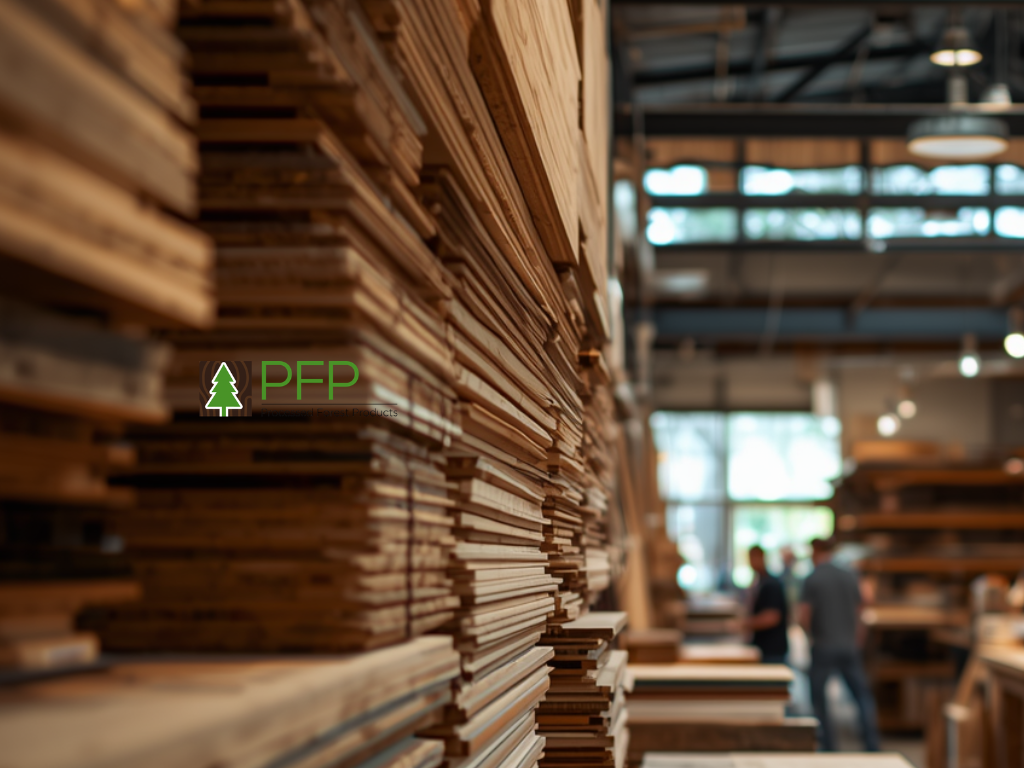
Early discussion helps with complex panel layouts
The best time to contact a veneer supplier is not necessarily after every drawing is finished.
For straightforward cabinetry, choosing samples later in the process may be workable. For large feature walls, sequence-matched panels, unusual dimensions, curved elements or custom doors, earlier involvement can help identify practical limitations before they become expensive changes.
For example, the preferred grain direction may influence how panels need to be ordered. A continuous veneer sequence may affect panel dimensions and quantities. An unusual board size may affect substrate availability.
TVAA’s guidance consistently emphasises planning and communication between the designer, manufacturer and supplier to achieve the intended veneer result.
If Forest Products or another supplier is being considered, share the project requirements early enough for them to understand what the sample needs to represent.
That gives the sample a clear purpose rather than simply asking for a piece of timber that happens to be the right species.
Give enough information to receive a useful sample
When requesting a sample, explain what you are actually trying to build.
Mention whether the veneer will be used for cabinetry, wall panels, furniture, doors or another interior application. Provide the approximate quantities and panel dimensions if known.
If you already have preferences for crown cut or quarter cut veneer, grain direction, matching, substrate or finish, include them.
Also explain whether you need natural veneer, reconstituted veneer or a specific certification or project requirement.
This information allows timber veneer suppliers to provide a sample that is more relevant to the eventual order.
For customers contacting Forest Products about its wood veneer supplies, the company’s current public range includes natural and reconstituted veneers, boards and custom manufacturing services from Milperra in NSW.
Once the right sample has been identified, make sure everyone involved in approval understands what it represents. If natural variation is expected, the approved sample should not be interpreted as guaranteeing every panel will be identical.
The goal is to establish a realistic visual and technical reference for the project.
For architects, cabinetmakers, joiners and homeowners, requesting samples before ordering timber panels can prevent avoidable misunderstandings about colour, grain, cutting method, matching and finish.
More importantly, it creates an opportunity to discuss the complete panel with the supplier before production starts.
When comparing timber veneer suppliers, use online images to narrow down your options, but use samples to make the final decision. Check how the timber looks beside surrounding finishes, confirm the proposed cut and grain direction, review the substrate and coating, and make sure sufficient material is actually available.
A little more attention at the sample stage can make the transition from design concept to finished veneer surface much more predictable.